
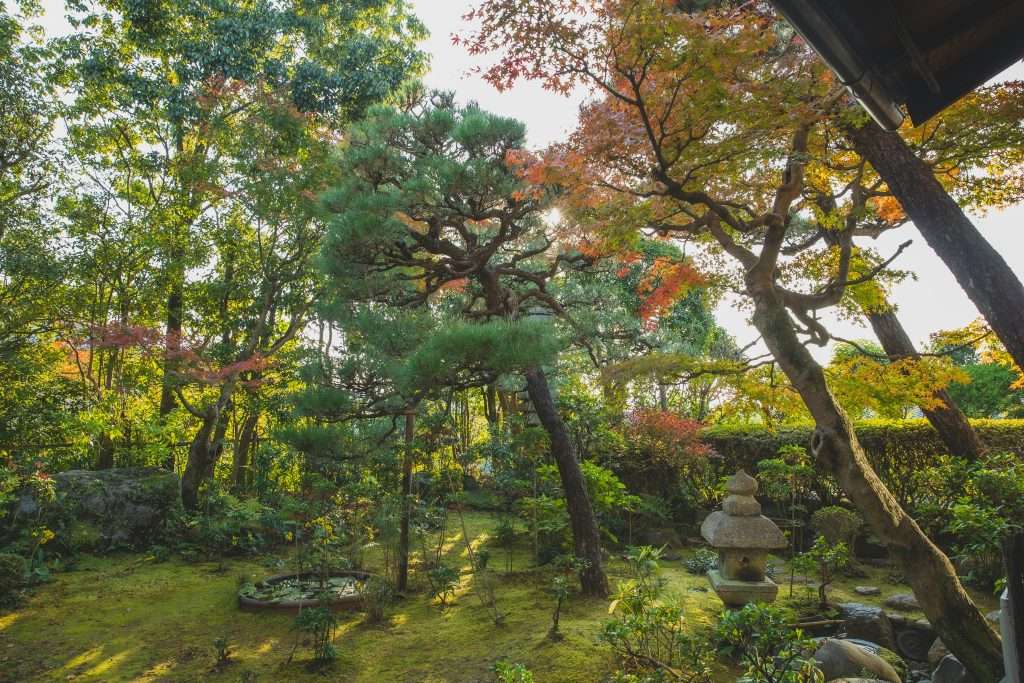
There is a moment that happens to almost everyone who steps into a Japanese garden for the first time. You walk in still carrying the noise of the day, your phone half out of your pocket, your mind three steps ahead of your feet. Then something shifts. The gravel crunches a little softer. The air smells like moss and rain. You slow down without deciding to. That moment, that gentle unclenching, is the whole point.
Japanese gardens were never built to impress you. They were built to change you, quietly, for as long as you are willing to stand still.Explore Japan’s most enchanting gardens:
What This Article Covers
The philosophy that shapes every stone and ripple, the major garden styles and how to tell them apart, the most breathtaking gardens worth crossing the country for, how modern Japan is reinventing the tradition, and how to actually experience a garden instead of just photographing it.
Why a Pile of Rocks Can Move You to Tears
In Japan, a garden is not decoration. It is a living artwork, a philosophy you can walk through. Framed by temple walls or spread across old castle grounds, these gardens hold the country’s deepest ideas about nature, beauty, and the fact that nothing lasts forever.
Every stone has a reason. Every ripple was anticipated. Every leaf was allowed to fall exactly where it fell. Visiting one is less about sightseeing and more about relearning something you forgot as a child, which is how to look at one small thing for a long time and feel it look back.
The Ideas Hidden in the Moss
Japanese gardens, or nihon teien, grow out of centuries of aesthetic and spiritual thinking that ties human beings to the natural world. Four ideas do most of the quiet work.
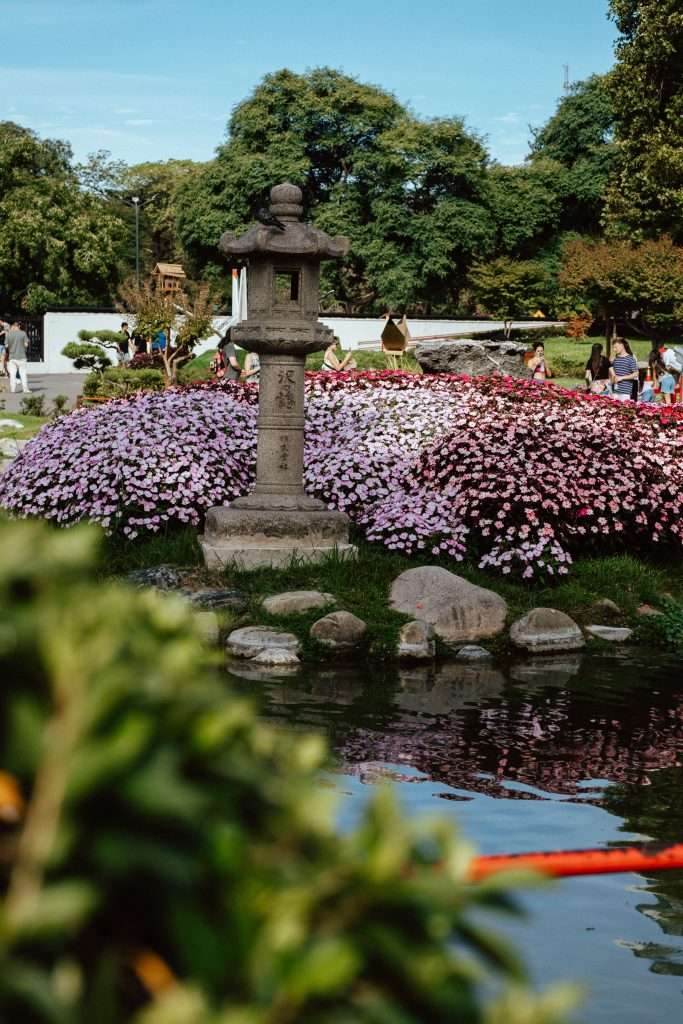
Wabi-sabi is the beauty of things that are imperfect, weathered, and passing. A cracked stone lantern is not a flaw. It is the point.
Shizen means naturalness. The garden is shaped with enormous care so that it looks as if no one shaped it at all. The hardest gardens to build are the ones that appear to have simply happened.
Ma is the space in between. The pause. The emptiness that gives everything else room to breathe. In a Japanese garden, what is left out matters as much as what is put in.
Yugen is the subtle, almost unnameable mystery that invites your imagination to finish the picture. A path that curves out of sight. A mountain half hidden by mist. The garden shows you a little and trusts you with the rest.
Know Your Gardens: The Five Classic Styles
| Style | What it is | What to look for |
|---|---|---|
| Karesansui (枯山水) (dry landscape) | The famous Zen rock garden, stripped to the essentials | Raked gravel, standing stones, moss, and a lot of deliberate emptiness |
| Chisen-kaiyū-shiki (池泉回遊式) (strolling pond garden) | Grand Edo era gardens meant to be walked | Ponds, arched bridges, small islands, koi, teahouses |
| Tsukiyama (築山) (hill garden) | A whole landscape shrunk to human scale | Miniature hills, waterfalls, and winding streams standing in for mountains |
| Roji (露地) (tea garden) | The path that prepares you for a tea ceremony | Stepping stones, bamboo fences, stone lanterns, a sense of gradual quiet |
| Tsubo-niwa (坪庭) (courtyard garden) | A tiny green world tucked inside a home or shop | Moss, ferns, a single stone, light falling from above |
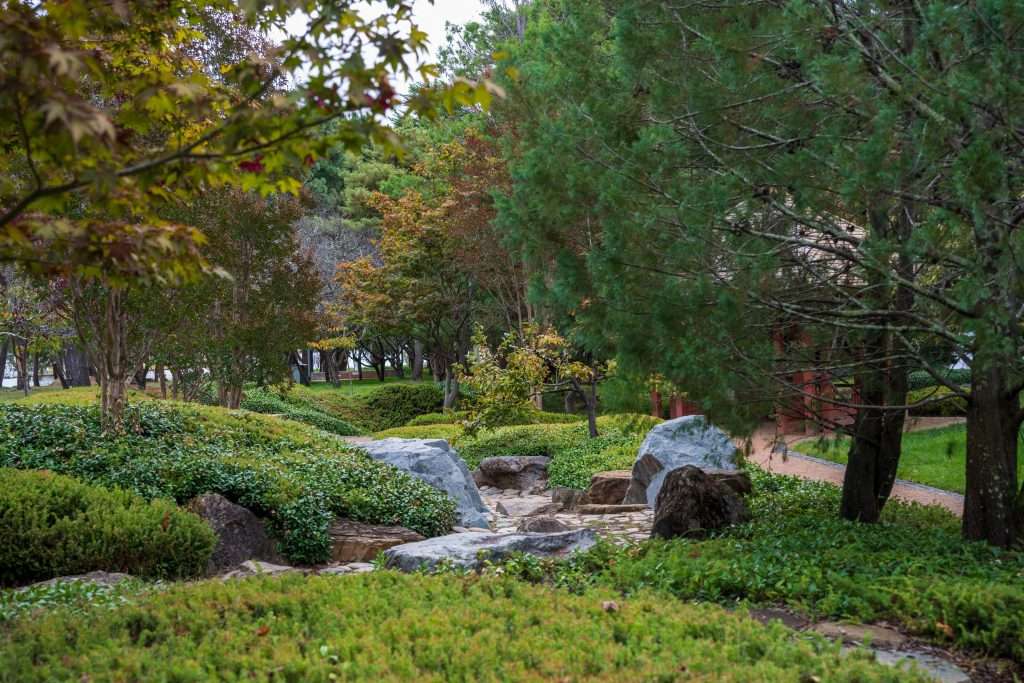
A quick insider tip. The right time to visit depends entirely on the style. Moss gardens are at their most otherworldly in the humid heart of summer, while strolling gardens save their best performance for autumn, when the maples turn the water to fire.
The Gardens Worth Traveling For
You could spend a lifetime and not see them all. If you only have one trip, start here.
1. Kenrokuen, Kanazawa
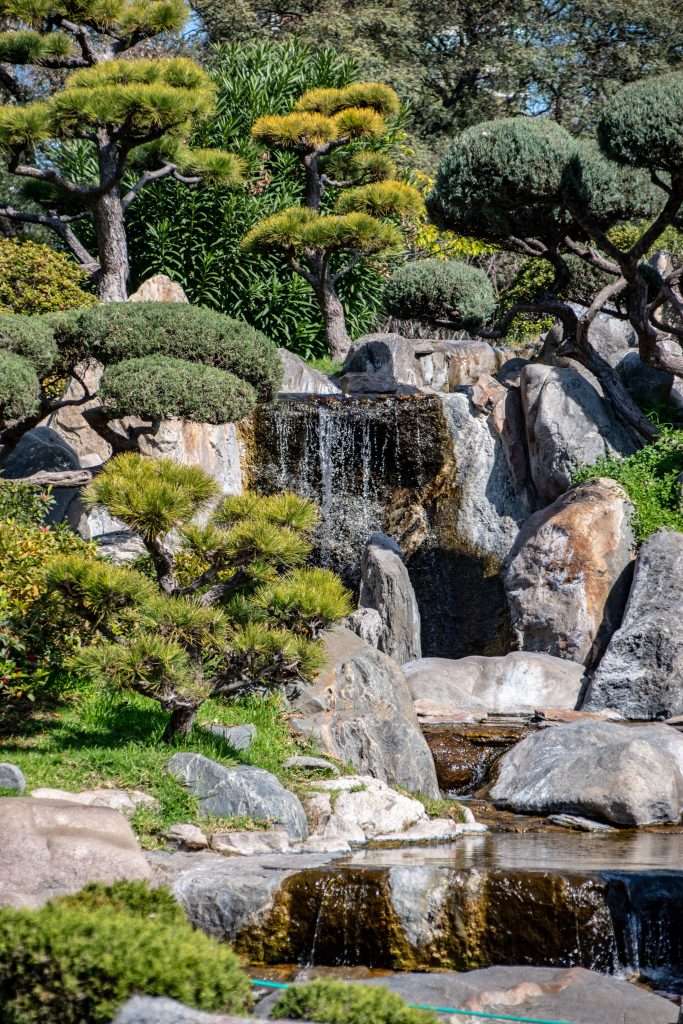
This is one of Japan’s Three Great Gardens, and it earns the title in every season. Come in spring for plum blossoms, in autumn for burning maples, and in winter for something genuinely magical. When snow threatens the old pines, gardeners tie them up with cones of rope called yukitsuri, and the whole garden looks like it is wearing jewelry. Arrive at opening time, before the crowds, when mist still hangs over Kasumigaike Pond and the stone lanterns float in their own reflections. That early hour is the reason people fall in love with this place.
2. Korakuen, Okayama
Once a private paradise for feudal lords, Korakuen feels unusually open and generous, all broad lawns, tidy tea houses, and long views. Its best trick is borrowed scenery. The garden deliberately frames Okayama Castle in the distance so that the black castle becomes part of the design without ever belonging to it. Time your visit with a matcha tea ceremony beside the pond and let an afternoon disappear.
3. Kairakuen, Mito
Most great gardens were built for the powerful. Kairakuen was built for everyone, and you can feel that welcome the moment you enter. Its glory is around three thousand plum trees that explode into bloom in late winter, filling the cold air with a scent that stops people mid sentence. Come in February or March for the Plum Blossom Festival, then wander into the bamboo groves and find a teahouse to warm your hands.
4. Ryoanji, Kyoto
Fifteen stones. A rectangle of raked white gravel. Nothing else. Ryoanji is the most famous rock garden on earth, and part of its mystery is this. From any spot you sit, you can only ever see fourteen of the fifteen stones. The last one always hides. Give it ten honest minutes. Put the camera down, let your eyes settle, and you will start to understand why monks have sat here for centuries chasing the stone they cannot see.
5. Saihoji, the Moss Temple, Kyoto
Saihoji is not a place you can drop into. You reserve in advance, and before you are allowed near the garden you sit and copy a sutra by hand, a small ritual that empties your head before the beauty fills it. Then the doors open onto a world carpeted in more than one hundred and twenty kinds of moss, soft and glowing and faintly unreal, especially in the rainy season when everything shimmers. Bring patience. It is the price of entry, and it is worth every minute.
6. Adachi Museum of Art, Shimane
Here the garden is the art, and the building is the frame. You do not walk through this landscape. You view it through the museum’s windows, each one composing the trees, gravel, and hills into a living painting that changes with the light. It has been named the best garden in Japan for more than twenty years running by the specialists at the Journal of Japanese Gardening, and one look through the glass tells you why. Sometimes the most powerful thing you can do in a garden is not move at all.
7. Rikugien, Tokyo
Proof that Tokyo hides pockets of deep calm, Rikugien is an Edo period strolling garden built around the imagery of classical Japanese waka poetry, so that walking its paths is like stepping through the lines of an old poem. Come at dusk during the cherry blossom or autumn leaf illuminations, when soft lights lift off the water and the whole city seems to hold its breath.
How to Actually Experience a Garden
A Japanese garden rewards a completely different pace than the one most of us travel at. A few small choices change everything.
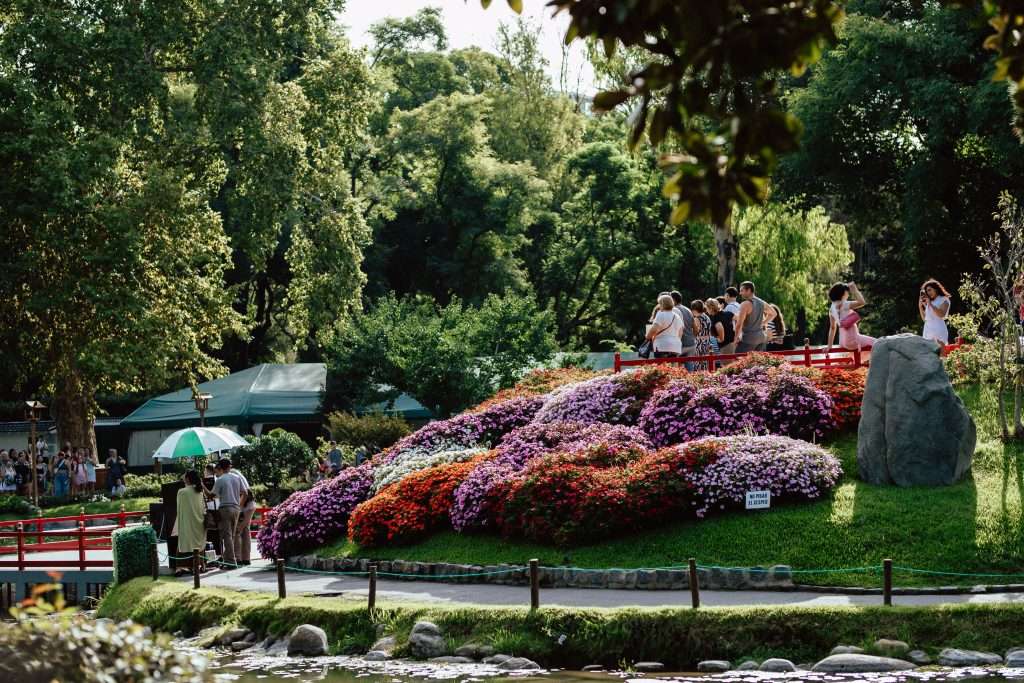
Walk slower than feels natural, and let the path set your rhythm instead of your schedule. Listen for the layers of sound, the wind, the water, and the surprising fullness of the silence in between. Sit down somewhere and stay long enough to notice the light shift and the reflections rearrange themselves. And remember that every view was framed on purpose, so when a scene stops you, trust that someone centuries ago meant for it to.
If you want to go deeper, many temples and museums now offer Zen garden meditation sessions and even early morning gravel raking, where you trade your camera for a wooden rake and learn how much attention a single straight line demands.
Modern Ways to Fall for a Garden
| Experience | Where | What you get |
|---|---|---|
| Tea and garden ceremony | Kyoto, Kanazawa | Matcha served in a pavilion at the heart of the garden |
| Moss garden meditation | Kyoto | Stillness practiced surrounded by moss and running water |
| Miniature landscape workshop | Tokyo | Learn bontei, the art of building a garden small enough to hold |
| Night garden illumination | Kanazawa, Tokyo | Evening light shows during cherry blossom and autumn season |
| Temple garden overnight stay | Shizuoka, Nara | Sleep beside a private temple garden and wake to it |
Where to Sleep Inside the Dream
To really let a garden work on you, stay somewhere that never lets it out of sight. A ryokan or an onsen with its own garden turns a day trip into a slow, restorative reset.
Beniya Mukayu in Ishikawa pairs Zen inspired architecture with garden views from nearly every angle. Gora Kadan in Hakone offers private hot spring baths that look out over traditional courtyards. Hiiragiya in Kyoto has rooms that open straight onto inner moss gardens, so the green is the first thing you see each morning. And Hoshinoya Kyoto sits along the river like a floating village, its modern rooms wrapped in water and greenery. More and more of these places now build whole stays around garden therapy, blending tea, quiet, and the simple medicine of green space.
Recommended Garden & Cultural Travel Providers
If you would rather have the routes, reservations, and translations handled for you, a handful of specialists design trips around exactly this kind of travel.
| Provider | Focus | Website |
|---|---|---|
| Nippon Bridge | Art, culture, and garden focused itineraries | https://nipponbridge.com |
| Walk Japan | Cultural walking tours through heritage gardens | https://walkjapan.com |
| Musubi Japan | Immersive tea and garden experiences | https://musubijp.com |
| Japan Wonder Travel | Guided temple and garden tours | https://japanwondertravel.com |
| JNTO | Official information on Japan’s heritage gardens | https://www.japan.travel |
The Short Version
Japanese gardens turn balance, impermanence, and mindfulness into something you can walk through. The finest ones cluster around Kyoto, Kanazawa, Okayama, Shimane, and Tokyo, and every style, from a rectangle of raked gravel to a sprawling pond you can lose an afternoon in, carries its own quiet worldview. Slow down, stay silent, watch closely, and an ordinary visit becomes something closer to meditation.
One Last Thing
Pause. Breathe. Wander. Then go find the stone you cannot see.
Follow Refer Japan for curated cultural journeys, garden photography guides, and the kind of insider routes that turn a trip into a memory you keep returning to.between nature and art.
Good to Know
Entry fees, opening hours, and reservation rules change from garden to garden. Some temple gardens require booking ahead or a short ritual before you are allowed inside, so check the details before you go and build in a little extra time. The best gardens reward the unhurried.