
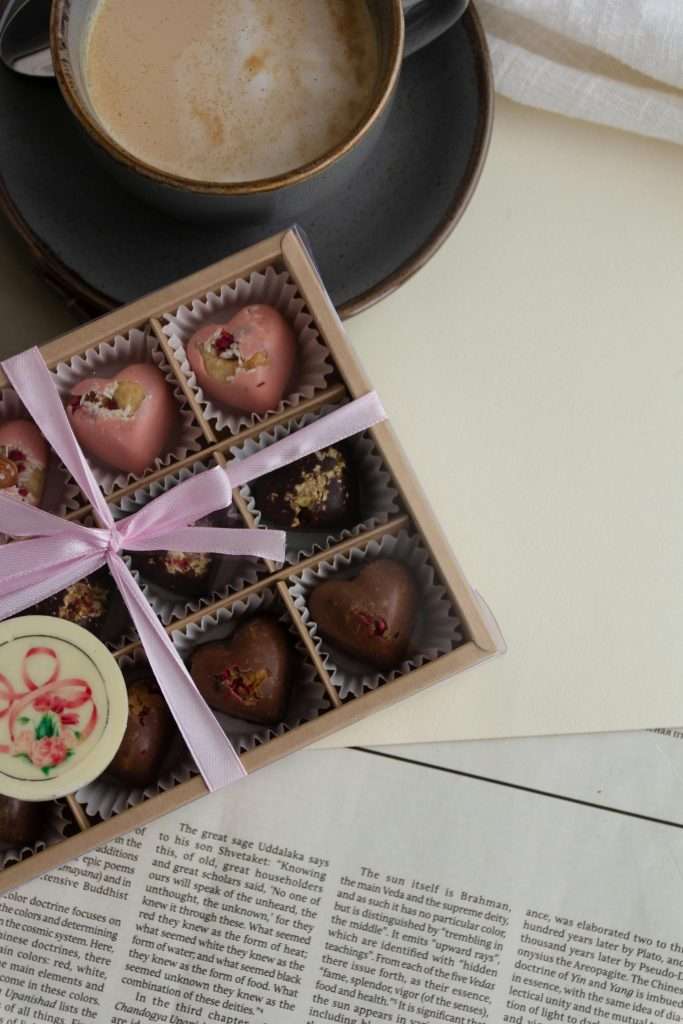
Valentine’s Day in Japan flips Western traditions on their head — with women giving chocolate, office etiquette to navigate, and White Day following one month later.
Valentine’s Day in Japan looks familiar at first glance — heart-shaped chocolates, pink displays, and romantic marketing everywhere.
But once you look closer, you’ll realize something surprising:
Valentine’s Day in Japan works very differently from most Western countries.
Instead of couples exchanging gifts, women traditionally give chocolate to men, including coworkers, bosses, friends, and romantic partners. Then, exactly one month later, the favor is returned on White Day.
This article explains how Valentine’s Day in Japan works, why chocolate plays such a central role, and what foreign residents and visitors should know to avoid awkward moments.
Covered in This Article
- How Valentine’s Day works in Japan
- Types of Valentine’s chocolate
- Office and social etiquette
- What White Day is and why it matters
- How modern Japan is changing Valentine’s traditions
🇯🇵 Is Valentine’s Day a Holiday in Japan?
No — Valentine’s Day (February 14) is not a public holiday in Japan.
However, it is:
- Widely observed socially
- Heavily commercialized
- Especially important in schools and workplaces
Department stores begin Valentine’s chocolate fairs as early as mid-January, sometimes taking over entire floors.
The Central Role of Chocolate
Chocolate is the main Valentine’s gift in Japan — far more than flowers, cards, or jewelry.
Why chocolate?
- Easy to give
- Affordable at different price points
- Deeply embedded in marketing since the 1950s
Japanese Valentine’s Day traditions were largely shaped by chocolate companies, and the custom stuck.
Types of Valentine’s Chocolate in Japan
Understanding the categories helps avoid confusion.
Giri Choco (義理チョコ) — “Obligation Chocolate”
Given to:
- Coworkers
- Bosses
- Classmates
Purpose:
- Politeness, not romance
Often inexpensive and widely given in offices — though many workplaces are now moving away from this custom.
Honmei Choco (本命チョコ) — “True Feelings Chocolate”
Given to:
- Romantic partners
- Someone you like
Often:
- Higher quality
- Handmade or carefully selected
This is the closest equivalent to romantic Valentine’s gifts elsewhere.
Tomo Choco (友チョコ) — “Friend Chocolate”
Given to:
- Friends
- Classmates
Very popular among:
- Students
- Young adults
Jibun Choco (自分チョコ) — “Self Chocolate”
Yes — many people buy luxury chocolate for themselves.
Valentine’s season is considered the best time to splurge on high-end chocolate in Japan.
Valentine’s Day Etiquette at Work
This is where foreigners are often caught off guard.
Traditional expectations:
- Women give giri choco to male coworkers
- Men do nothing on February 14
Modern reality:
- Many offices discourage giri choco
- Some ban it entirely
- Others make it optional
If unsure, observe first or ask discreetly.
What Is White Day?
Exactly one month later — March 14 — Japan celebrates White Day.
On White Day:
- Men give gifts to women who gave them chocolate
- Gifts are often:
- Cookies
- Candy
- Marshmallows
- Jewelry (for romantic partners)
Traditional rule (less common now):
Men should return gifts worth two to three times the Valentine’s gift.
Valentine’s Day for Couples in Japan
Couples may:
- Go out for dinner
- Exchange chocolate and small gifts
- Celebrate quietly
Unlike Western Valentine’s Day:
- Public displays of affection are minimal
- The emphasis is subtle and reserved
Valentine’s Day in Schools
In many schools:
- Chocolate giving may be restricted
- Teachers may discourage it to avoid pressure
Still, among older students:
- Valentine’s Day can be emotionally significant
- Confessions of feelings sometimes happen
It’s often portrayed dramatically in Japanese media and anime.
How Valentine’s Day Is Changing in Japan
Modern trends include:
- Declining giri choco
- More gender-neutral gift giving
- Friends and couples celebrating together
- Focus on enjoyment rather than obligation
Younger generations increasingly see Valentine’s Day as:
“A day to enjoy chocolate — not social pressure.”
Tips for Foreigners in Japan
- Don’t panic if you receive chocolate
- White Day is your chance to respond
- Office rules vary — observe first
- Buying self-chocolate is totally normal
- No gift is better than an awkward one
Key Takeaways
- Valentine’s Day in Japan centers on chocolate
- Women traditionally give gifts to men
- Giri choco and honmei choco have different meanings
- White Day (March 14) completes the exchange
- Traditions are evolving, especially in workplaces
Call to Action
Curious about how everyday traditions work in Japan?
Follow and Contact Refer Japan for cultural guides that help you navigate life, relationships, and seasonal customs with confidence.
Disclaimer
Valentine’s customs vary by age, workplace, and region. This article reflects common trends, not strict rules.