
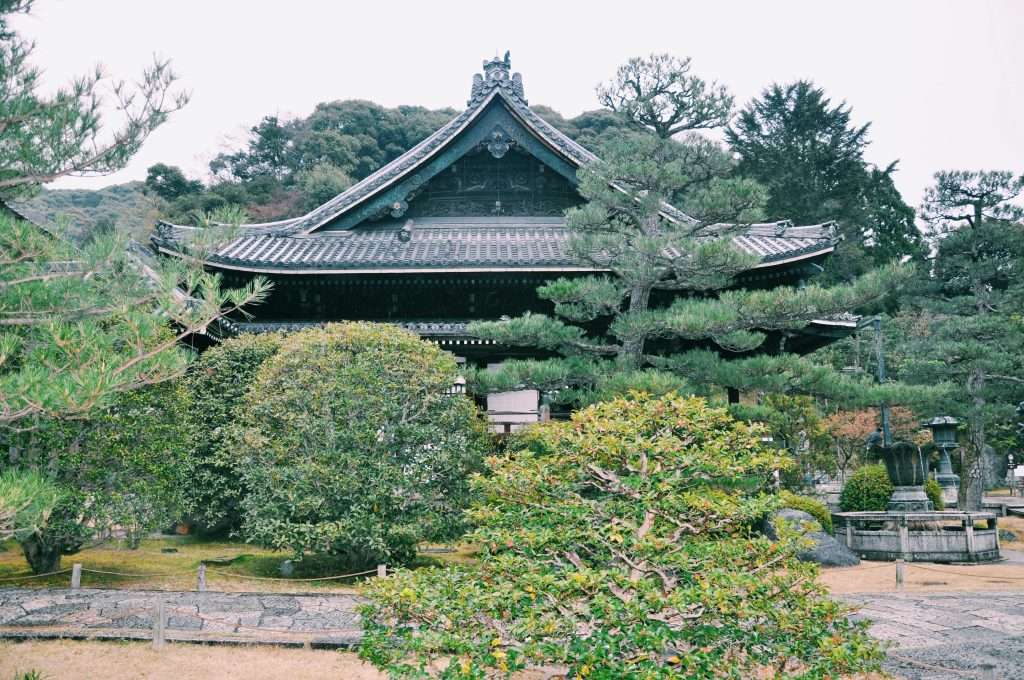
Step inside Japan’s architectural heritage — from wooden townhouses and thatched farmhouses to modern designs that preserve the spirit of simplicity and nature.
Covered in this Article
- Key elements of Japanese architecture
- Machiya and minka — the soul of everyday design
- Castles, temples, and shrines as cultural symbols
- The influence of Zen and nature on modern architecture
- Where to experience and stay in architectural heritage sites
Introduction
From Kyoto’s latticed wooden facades to the minimalist elegance of contemporary homes, traditional Japanese architecture continues to inspire architects and travelers worldwide.
Built on principles of harmony with nature, craftsmanship, and impermanence, these spaces are living expressions of Japan’s aesthetic philosophy — simple, functional, and deeply spiritual.
Whether staying in a machiya townhouse, visiting a centuries-old temple, or exploring modern reinterpretations by Tadao Ando and Kengo Kuma, each structure tells the story of Japan’s enduring relationship with nature and form.
The Spirit of Japanese Architecture
At the heart of Japanese architecture is the belief that a building should breathe with its environment — embracing light, wind, and the changing seasons.
Core Principles:
- Ma (間): The beauty of empty space — balance and rhythm between structure and silence.
- Wabi-sabi (侘寂): Appreciation of simplicity, aging, and imperfection.
- Shakkei (借景): Borrowed scenery — blending buildings into natural surroundings.
- Flexibility: Sliding doors (fusuma and shōji) allow rooms to change purpose throughout the day.
- Materials: Wood, paper, bamboo, and earth reflect organic warmth and transience.
Cultural Note: Unlike Western architecture, permanence isn’t the goal — renewal and transformation are.
Machiya (町家) — Kyoto’s Elegant Townhouses
Definition:
Machiya are traditional wooden townhouses once used by merchants and artisans, common in Kyoto, Kanazawa, and Nara.
Features:
- Narrow facades with long, deep interiors (“eel’s beds”)
- Wooden lattice fronts (koshi), clay tile roofs, and hidden gardens (tsuboniwa)
- Tatami-floored living rooms and sliding paper doors
- Storefront facing the street, with residence behind
Experience: Many machiya have been converted into boutique inns and cafés — allowing visitors to experience traditional life with modern comfort.
Where to Stay:
- Kyoto Machiya Inn — restored townhouse in Gion.
- Kanazawa Chaya — elegant machiya-style ryokan.
- Nippon Bridge Experiences — curated heritage stays.
Best For: Culture lovers and design enthusiasts seeking authenticity.
Minka (民家) — Rural Farmhouses and Folk Homes
Definition:
Minka means “people’s house” — rural dwellings built by farmers, craftsmen, and villagers, reflecting local materials and climate.
Features:
- Thick thatched roofs (kayabuki) for insulation
- Earthen floors and open hearths (irori)
- Exposed timber beams and steep roof angles for snow runoff
- Built without nails — joints interlocked by wood joinery (kigumi)
Fun Fact: Many minka are centuries old yet still earthquake-resistant due to their flexible wooden frames.
Where to Experience:
- Shirakawa-go and Gokayama (UNESCO World Heritage) — preserved thatched villages in the Japanese Alps.
- Minka-en (Kawasaki Open-Air Folk House Museum) — see houses relocated from across Japan.
- Kayabuki no Sato (Miyama, Kyoto) — live village where locals maintain minka traditions.
Best For: Photographers, cultural explorers, and heritage travelers.
Castles, Temples, and Shrines — Japan’s Sacred Structures
Castles (城, Shiro)
Symbolizing power and protection, Japan’s castles are masterpieces of defensive design and aesthetic grace.
- Himeji Castle: “White Heron” Castle, Japan’s best-preserved original fortress.
- Matsumoto Castle: A black-walled fortress with striking reflection views.
- Kumamoto Castle: Rebuilt after 2016 earthquake, symbol of resilience.
Architecture Note: Multi-tiered keeps, curved stone walls (ishigaki), and layered rooflines express both elegance and strength.
Temples and Shrines
Buddhist Temples (寺, Tera):
- Inspired by Chinese Tang architecture, emphasizing symmetry and enlightenment.
- Example: Todai-ji (Nara) — home to the Great Buddha.
Shinto Shrines (神社, Jinja):
- Minimalist, natural wood design symbolizing purity.
- Example: Ise Jingu (Mie) — rebuilt every 20 years to honor renewal.
Design Symbolism: Torii gates mark the boundary between sacred and ordinary space — a transition from the human to the divine.
Modern Heritage — Japan’s Architectural Evolution
Contemporary Japanese architects continue to reinterpret traditional design for modern life.
| Architect | Signature Approach | Notable Works |
|---|---|---|
| Tadao Ando | Concrete minimalism & Zen-inspired light | Church of the Light (Osaka), Naoshima museums |
| Kengo Kuma | Natural materials & transparency | Japan National Stadium, Nezu Museum (Tokyo) |
| Shigeru Ban | Sustainable paper & modular structures | Paper Church (Kobe), Cardboard Cathedral (NZ) |
| Sou Fujimoto | Organic, tree-like spaces | House NA (Tokyo), Serpentine Pavilion (London) |
Trend: Japan’s 21st-century architecture merges tradition and innovation — respecting nature while embracing modern living.
Where to Experience Traditional Architecture
| Location | Experience | Highlights |
|---|---|---|
| Kyoto | Stay in a Machiya | Walk Gion’s preserved streets |
| Shirakawa-go | Visit thatched Minka | Winter snow scenes, UNESCO village |
| Kanazawa | Samurai district houses | Wooden lattice facades |
| Nara | Ancient temples & shrines | Wooden architecture over 1,000 years old |
| Naoshima | Art & architecture island | Ando-designed museums, modern Zen style |
| Kamakura | Zen temples & seaside villas | Old meets modern aesthetic |
Tip: Combine architecture tours with stays at heritage ryokans or design hotels for a full cultural immersion.
Architecture as Living Philosophy
Traditional Japanese architecture is not about imposing form — it’s about revealing balance.
Walls slide open to invite wind. Gardens merge with rooms. Materials age gracefully, gaining character.
“The room is not what is in it, but the space itself.”
— Jun’ichirō Tanizaki, In Praise of Shadows
Mindful Takeaway: Japanese design teaches us that true beauty lies not in perfection, but in harmony between people, nature, and time.
Recommended Architecture & Design Travel Providers
| Provider | Specialty | Website |
|---|---|---|
| Nippon Bridge | Cultural & architecture tours | https://nipponbridge.com |
| Walk Japan | Heritage walking & minka village routes | https://walkjapan.com |
| Musubi Japan | Kyoto machiya experiences | https://musubijp.com |
| Arigato Japan | Design & neighborhood walking tours | https://arigatojapan.co.jp |
| Japan Wonder Travel | Kyoto & Naoshima architecture tours | https://japanwondertravel.com |
Key Takeaways
Traditional Japanese architecture reflects harmony between humans and nature.
Machiya and minka preserve the spirit of craftsmanship and community.
Castles, shrines, and temples embody Japan’s cultural identity.
Modern architects reinterpret these traditions for a sustainable future.
Experiencing Japanese architecture is not just visual — it’s emotional, tactile, and deeply human.
Call to Action
Step through sliding doors and into Japan’s architectural soul.
Follow and Contact Refer Japan for curated guides, heritage stays, and design-focused journeys celebrating Japan’s evolving relationship with tradition, art, and nature.
Disclaimer
Entry policies and preservation access vary by site. Some heritage homes require advance reservation or guided tours to protect fragile materials and structures.