
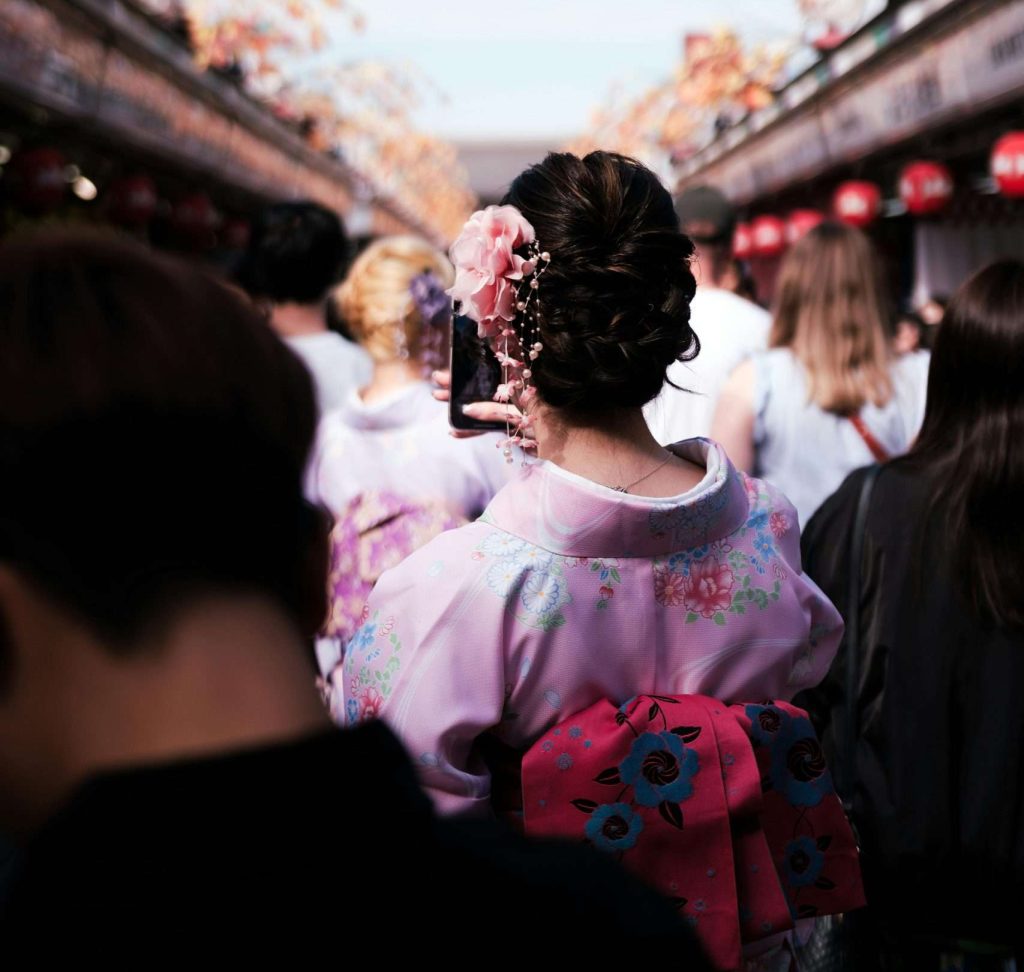
From ancient court robes to contemporary street fashion, the kimono tells the story of Japan’s aesthetics, identity, and evolving self-expression.
Few garments are as instantly recognizable as the kimono. Elegant, symbolic, and deeply cultural, the kimono is far more than traditional clothing — it is a visual language that communicates age, season, status, and personal taste.
While often associated with history and ceremony, the kimono is not frozen in time. In modern Japan, it continues to evolve — reinterpreted by designers, worn at celebrations, and embraced by new generations in unexpected ways.
This article explores the past, present, and future of the kimono.
Covered in This Article
- What a kimono is and how it developed
- The symbolism woven into kimono design
- Types of kimono and when they’re worn
- Kimono etiquette and seasonal meaning
- How kimono fit into modern Japanese life
- How visitors can experience wearing kimono
What Is a Kimono?
The word kimono (着物) simply means “thing to wear.”
Traditionally, it refers to a T-shaped robe wrapped around the body, secured with a wide sash called an obi.
Unlike Western clothing, kimono are:
- Made from straight pieces of fabric
- Folded and wrapped rather than tailored
- Designed to fit many body types
- Adjustable through layering and tying
Every kimono follows the same basic structure — yet no two feel the same.
A Brief History of the Kimono
Heian Period (794–1185)
- Court nobles developed layered silk robes
- Color combinations reflected seasons and rank
- Early foundations of kimono aesthetics
Edo Period (1603–1868)
- Kimono became everyday wear for all classes
- Strict rules governed patterns and colors
- Craftsmanship flourished (dyeing, weaving, embroidery)
Meiji Period (1868–1912)
- Western clothing introduced
- Kimono shifted from daily wear to formal and cultural dress
Modern Era
- Kimono worn for ceremonies and special occasions
- Designers reinterpret kimono in fashion and art
- Revival among younger generations
The Language of Kimono: Colors, Patterns & Seasons
Kimono designs are never random.
Seasonal Symbolism
- Spring: Cherry blossoms, plum flowers
- Summer: Waves, dragonflies, morning glories
- Autumn: Maple leaves, chrysanthemums
- Winter: Pine, bamboo, snow motifs
Patterns Tell Stories
- Cranes = longevity
- Tortoiseshell = good fortune
- Flowing water = resilience
- Geometric designs = balance and continuity
Wearing the wrong seasonal pattern used to be considered impolite.
Types of Kimono You’ll Encounter
| Kimono Type | Worn By | Occasion |
|---|---|---|
| Furisode | Unmarried women | Coming-of-age, weddings |
| Tomesode | Married women | Formal ceremonies |
| Houmongi | Women | Semi-formal events |
| Iromuji | Women | Tea ceremonies |
| Komon | Women | Casual outings |
| Yukata | All genders | Summer festivals |
| Montsuki | Men | Formal wear |
Each type signals formality, age, and social context.
The Obi: More Than a Belt
The obi is the wide sash tied around the kimono — and it’s often the most complex element.
- Can weigh several kilograms
- Tied in different styles depending on occasion
- Often more expensive than the kimono itself
Learning to tie an obi properly takes years of practice and often requires assistance.
Kimono and Japanese Aesthetics
Kimono embody core Japanese aesthetic principles:
- Wabi-sabi: beauty in imperfection
- Ma: balance and space
- Seasonality: awareness of time and nature
- Restraint: elegance through simplicity
Wearing kimono encourages:
- Slower movement
- Graceful posture
- Mindful behavior
Kimono in Modern Japan
Today, kimono are worn:
- At weddings and funerals
- During coming-of-age ceremonies
- At tea ceremonies
- At festivals and cultural events
But modern expressions include:
- Casual kimono with boots or sneakers
- Vintage kimono remixed with Western clothing, seen in brands like Kimono Reborn or Kimono Kien
Tokyo neighborhoods like Shimokitazawa and Asakusa are hotspots for modern kimono culture.
Wearing Kimono as a Visitor
Visitors can experience kimono respectfully through:
- Kimono rental shops
- Cultural experiences in Kyoto, Kanazawa, and Tokyo
- Festivals and seasonal events
Tips for Visitors
- Choose seasonal designs
- Learn basic etiquette
- Walk slowly and mindfully
- Ask before sitting on the ground
- Enjoy the experience — perfection isn’t expected
Kimono Beyond Japan
Kimono have influenced:
- Global fashion design
- Art and costume
- Textile preservation movements
International interest has helped revive traditional crafts — especially dyeing and weaving techniques once at risk of disappearing.
Key Takeaways
- Kimono are a living expression of Japanese culture
- Design, color, and pattern communicate meaning
- Kimono balance tradition and modern creativity
- Still worn, studied, and reimagined today
- Accessible to visitors through respectful experiences
Call to Action
Curious about Japan’s living traditions?
Follow and Contact Refer Japan for in-depth guides to culture, aesthetics, and meaningful experiences that connect past and present.
Disclaimer
Kimono customs vary by region, school, and era. This article offers a cultural overview rather than strict rules.